ST. JOHNS GOLF & COUNTRY CLUB (904-940-3200)
Florida Golf Course Review
St. Johns Golf & Country Club is a well groomed Clyde Johnstons's design that measures a whopping 7,136 yards from the tips and plays to top slope rating of 132. It is a
spectacular layout featuring outstanding conditioning with water hazards on 12 of the 18 holes. Priced at just $52 weekdays and $64 weekends in season in 2004 (including cart),
this is one of the best values available in NE Florida. On property facilities include a beautiful 10,000 square foot modern clubhouse, with a 75 seat grill room/lounge, large covered
patio for outdoor barbeque that seats 144 people, a pro shop, plus men's and ladies' locker facilities with showers. Beautiful views of the ninth and eighteenth greens can be
enjoyed from both the restaurant and patio. A grass range with target areas plus putting & chipping greens are also on property.
One of the most outstanding characteristics of St Johns Golf & Country Club ( not to be confused with the St Johns County Course which is further south) is the oversized,
extremely well conditioned and mildly undulating putting surfaces, that are very receptive and a joy to putt on. Another is the fact that this course can be enjoyed by golfers of all
skill levels - as 6 sets of tee boxes on each hole give golfers many options to choose from. Scratch golfers will meet their match from the gold tees which measure 7236 yards with
a 132 slope. The blues measure 6801 with a 128 slope, and the white tees (recommended for those with a handicap between 11-20) play to 6384/120 slope. Alternate sets
include the grays at 5986/116 slope for men and 131 for women, Reds at 5286/123, and the Family tees at 2397 yards.
The Par View GPS is standard on all carts, providing valuable info on the hole diagrams plus exact measurements to the pin from anywhere on each hole. 150 yards stakes
double as directional guides, especially on the frequent doglegs bending in either direction. To score well here, golfers will have to negotiate these doglegs with the second shot
in mind, while paying attention to the marsh areas that often line or intersect the fairways. Scorecards that provide hole diagrams and tips on how to play each hole also come in
handy. Golfers are not stiffly penalized for missing the greens here, as there is frequently room for error. A variety of high pitches and bump and runs will be needed to get up and
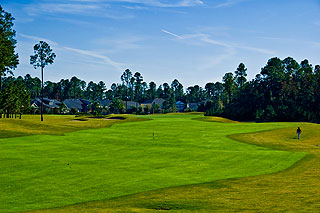
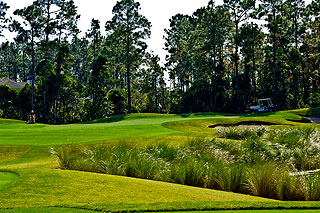
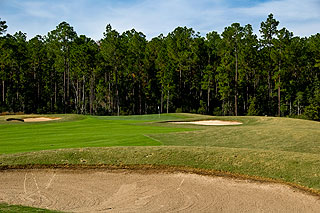
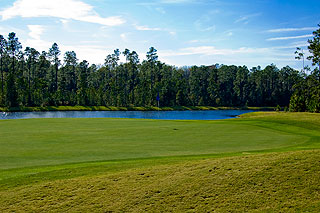
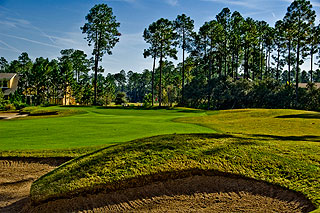
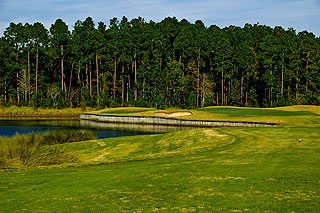
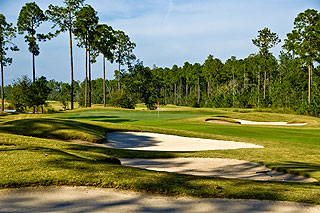
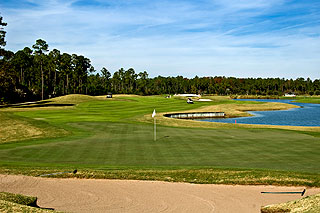
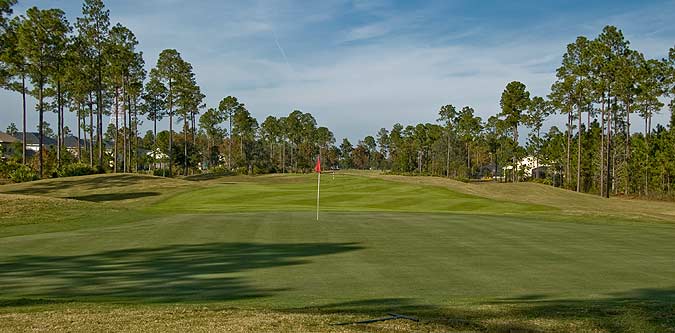
down. When viewing these photos of the course, keep in mind that at St Johns - as with many Florida courses - the fairways and roughs are allowed to go dormant to varying
degrees during the winter months. While these areas are not green as they are during the spring, summer and fall, it by no means effects the quality of the lies or shot making capabilities.
The opening hole is a straight away par four with natural areas on both side of the fairway - and a good beginning hole as the # 15 handicap. Number two is a challenging par five
that invites a tee shot placed in the left center of the fairway. A water hazard comes into play past the right fairway bunker, and mounding and sand traps also guard the left side of
the putting surface. There is plenty of room to the left on the long par three 3rd. From the back tees the shot must carry a pond, and from the gray tees forward the hazard is to the
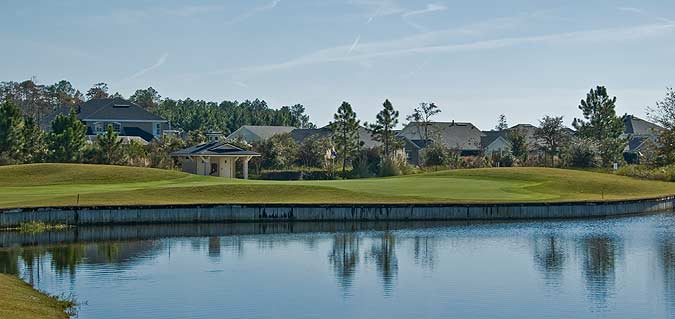
right. Tee shots hit right of center may find the water hazard on the pretty par four 4th. This hole is short enough that most golfers should aim left of center, to approach the
bulkhead green complex, which has plenty of room long. Number five is a mid length par three protected by a huge bunker in front and to the right. Again, there is some bail out
room short left of the putting surface. The most difficult four hole stretch on the course begins with the long par 4 sixth. There are water hazards on both sides of the fairway in the
landing area off the tee. The second shot must avoid the bunkers short right and directly left of a small green which slopes front to back. The 7th is equally demanding off the tee,
with long, narrow sand waste area left and more water right. The approach is best made to the right side of the green, as anything left is trouble. The par five 8th plays long, with the
fairway well defined by elaborate bunkering in the landing areas off the tee and on the second shot. Those attempting to reach in two may be fooled by the false front created by a
huge mound 40 yards in front of the actual green complex. The finishing hole on the front is the number one handicap - a dogleg right par four that plays 444 yards from the tips
(397 from the white tees). When the wind is up, this hole is a bear. The 10 bunkers that line the left side appear more inviting than the water hazard on the left. The green is well
protected on either side by more traps.
The back side begins with a relatively easy par four with the green and the fairway near the putting surface sloping right to left. Land on the fairway on the tight par four 11th, and
this hole is also score-able. The par five 12th bends sharply left near the 150 yard stake, with bunkers and water deep of the fairway on the right side. There is plenty of bail out
room - this time on the right - on the beautiful par three 13th, which features a huge green guarded by water and a sand trap in front. A tee shot aimed at the deep fairway bunkers
will achieve good results on the dogleg right par four 14th, which is handicapped as the easiest hole on the course. Number 15 plays long (461 from the tips and 402 from the
white tees) but presents a generous fairway enabling golfers to grip it and rip it off the tee. Bunkers - of the grass and sand variety, protect the putting surface. 16 is a long par five
with water in play both left and right on the second shot. A huge horseshoe shaped sand bunker that frames the left side of the green needs to be avoided here. There is water and
bunkers left of the green and mounds and grassy hollows to the right on the demanding par three 17th. If one must miss, the right side is the preferred target area. The final hole is
the course's # 2 handicap - and the longest par four of the day (462 from the tips, 406 from the whites). Three traps rest in prime position, effectively splitting the fairway in two.
Those approaching from the left side will have to navigate the water hazard on the approach, while long hitters hugging the right side will have a clear shot at the heavily bunkered
green complex. There is a bit of room for error to the right of the putting surface.
St. Johns Golf & Country Club is an outstanding facility - and is easily accessible from Jacksonville and the surrounding resort community. Wonderful course, great, friendly
service and a good value - a round here is highly recommended.
Click here to visit our informational page for this course, with a link to the St. Johns website.
|